WHAT HE CHECKS FIRST
Burglars Score Your Home In 6 Seconds.
He walks past your fence in four seconds and already knows. This is the same checklist, turned back on your own front door.
100+
pages
30-Day
guarantee
PDF
instant download

He walks past your fence in four seconds and already knows. This is the same checklist, turned back on your own front door.
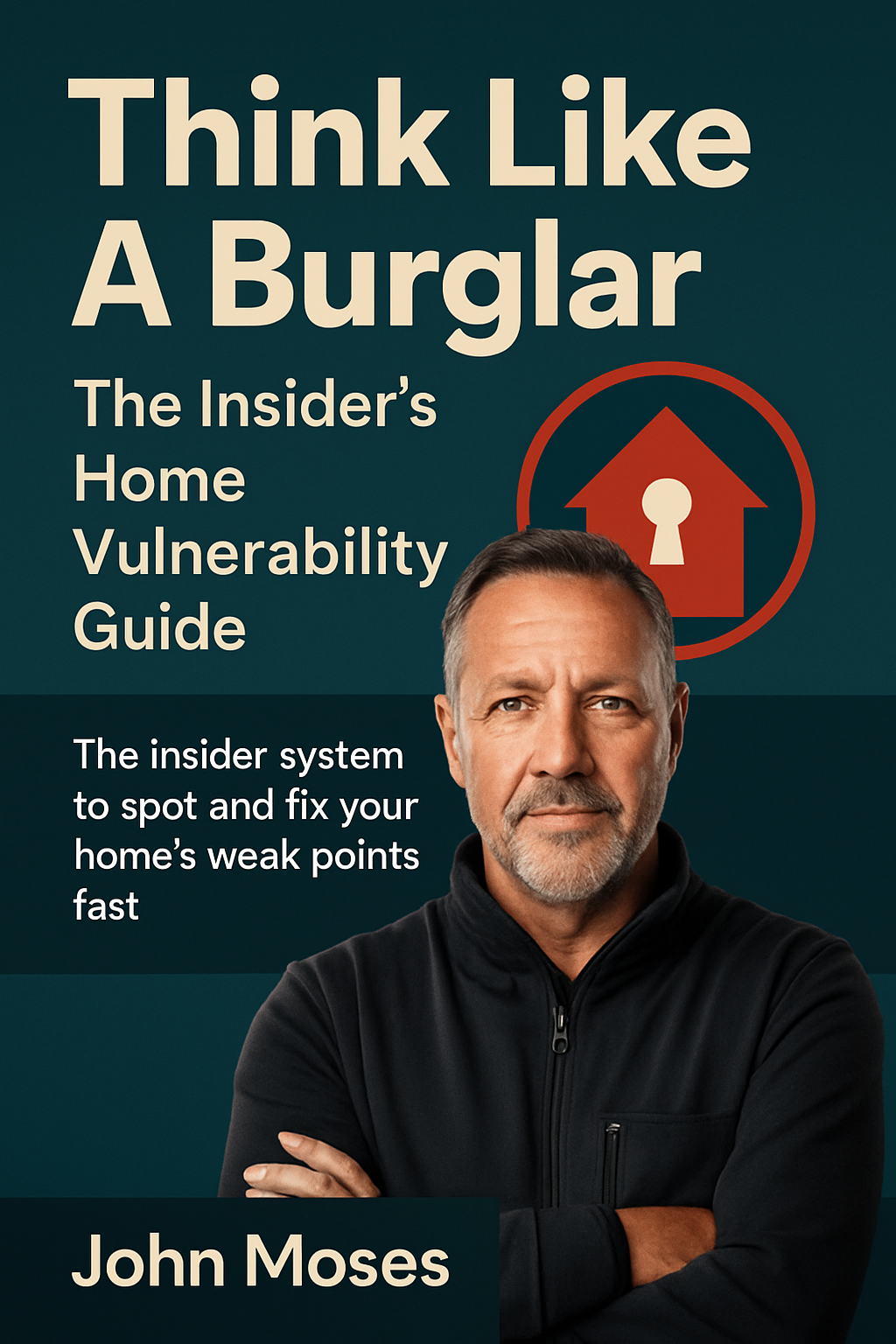
Score your home like he does. Fix it before he knocks.
The entire decision is made before he reaches your driveway. Here's what he's scanning for.
Why your neighbor's house got picked over yours last year — and what changed the odds.
He doesn't love windows. He tolerates them when the front door fails his test.
Three things visible from the sidewalk that tell him you're not home, right now.
Your deadbolt isn't the problem. The three screws behind it are.
The box you left at the curb last Tuesday told him more than your alarm sign ever will.
The self-assessment quiz that turns "I feel unsafe" into a number you can actually fix.
The specific adjustments that matter more when there's no second car in the driveway.
…and 17 more chapters, including the full 30-day fix schedule.
I spent three months reading FBI incident reports and burglar interview transcripts I had no business enjoying as much as I did. Not because I planned to catch anyone. Because I wanted to know, in plain numbers, what actually separates the house that gets hit from the one thirty feet away that doesn't.
The answer wasn't an alarm sticker. It wasn't a camera blinking over the porch. Most of what gets sold to homeowners is theater that catches the crime on video after it's already happened — useful for a police report, useless for the ten seconds before he decides your house is worth the risk. What stopped burglars, in report after report, was almost always something that cost under $15 and took thirty minutes to fix.
So I built the checklist backward — from his side of the fence, not yours. Then I turned it into a book: a walk-through of the same twenty-five decision points he runs on every house he passes, and a 30-day schedule to fail every one of his tests on purpose. This is that book.
Composite reflections from readers, shared with permission
"I did the vulnerability score from Chapter 17 on my own house and got a 61. My side gate alone knocked off nine points. Fixed it that weekend for about eleven dollars."
"I live alone and always felt a little foolish checking locks twice. Chapter 23 didn't make me feel foolish. It made me feel like I finally had a plan instead of a worry."
"I'd already spent $600 on a camera system. This book made me realize I hadn't touched the actual entry points once. Week two hardware fixes cost less than the camera's monthly fee."
Read it. Run the score on your own house. If it doesn't change how you look at your own front door, ask for a refund inside 30 days — no questions, no forms to fight through.
Get the Guide Risk-Free →A PDF, over 100 pages, delivered as an instant download the moment your payment clears. No shipping, no waiting, no app to install. Open it on your phone, tablet, or laptop tonight.
You have 30 days to decide. If it doesn't earn its place, ask for your money back. No questions asked, no guilt trip in the refund email.
No. It's built around the FBI's 2025 burglary data and structured as a self-assessment: you score your own rooms, then follow a 30-day fix schedule in the order that actually matters, starting with what costs under $15.
An alarm tells you the crime is happening. This book is about the ten seconds before he decides to try — the walk-by, the side gate, the spare key. Most alarm owners in the reports had never touched those.
The scoring system in Chapter 17 is built to be applied room by room, whatever your layout. Chapter 23, "When You Live Alone," is written specifically for single-occupant homes of any size.
Videos give you tips in no particular order. This book gives you a score, a priority list, and a calendar — so you're not guessing which fix matters most on week one.
Take it home for $47 instead of $80, backed by a 30-day money-back guarantee. If it doesn't change how you see your own front door, get a refund — no questions asked.
Get the Guide — $47 →